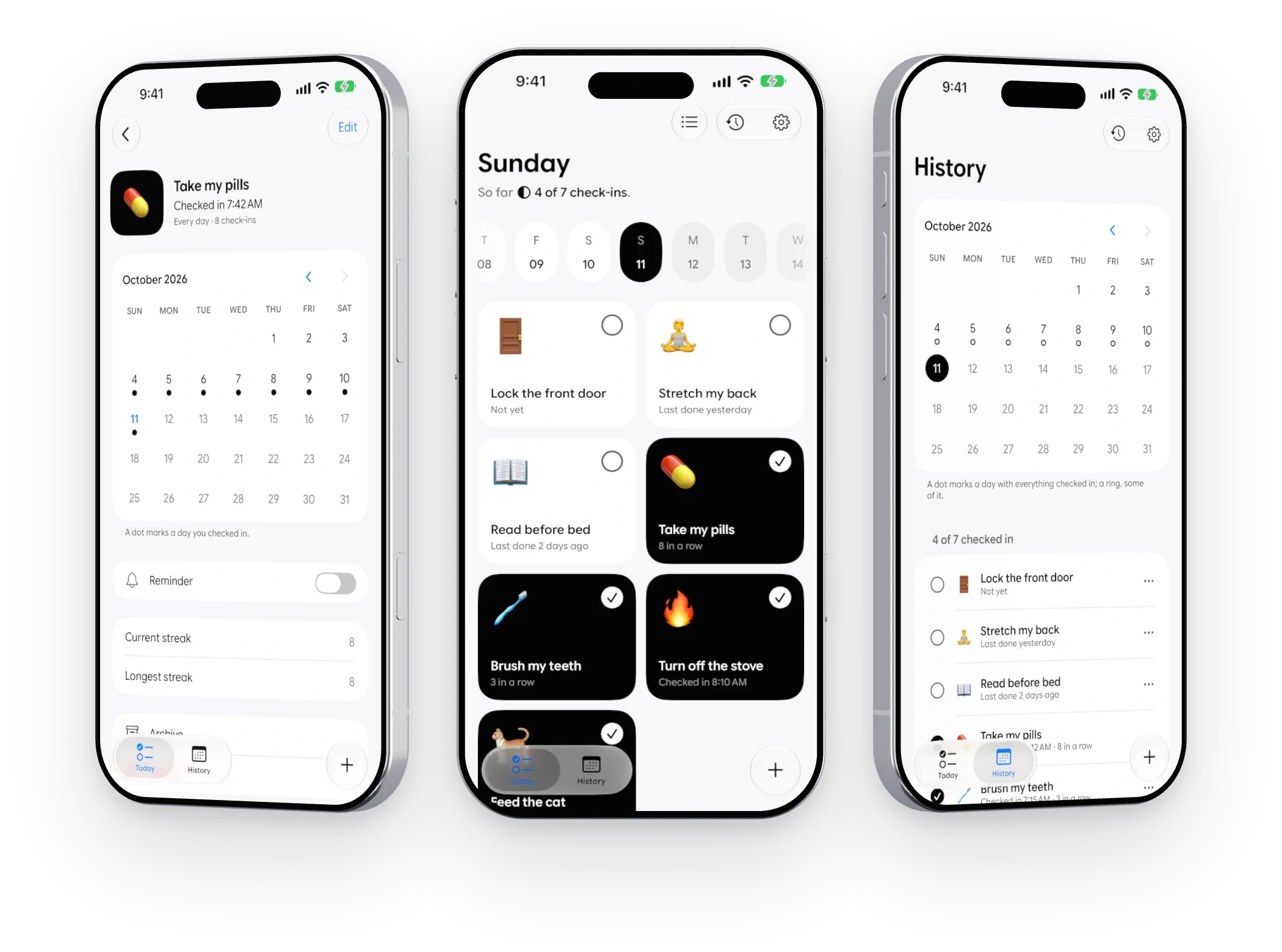
 Lucia · First & Last · 2026
Personal finance you own
My own product, under my own studio. I designed it, built it in SwiftUI with Claude Code, and shipped it to the App Store in six languages.
- Studio
- First & Last
- Role
- Product, design, system, code
- Year
- 2026
- Platform
- iPhone & iPad
- Shipped
- On the App Store ↗
01The product
Most finance apps rent you access to your own money.
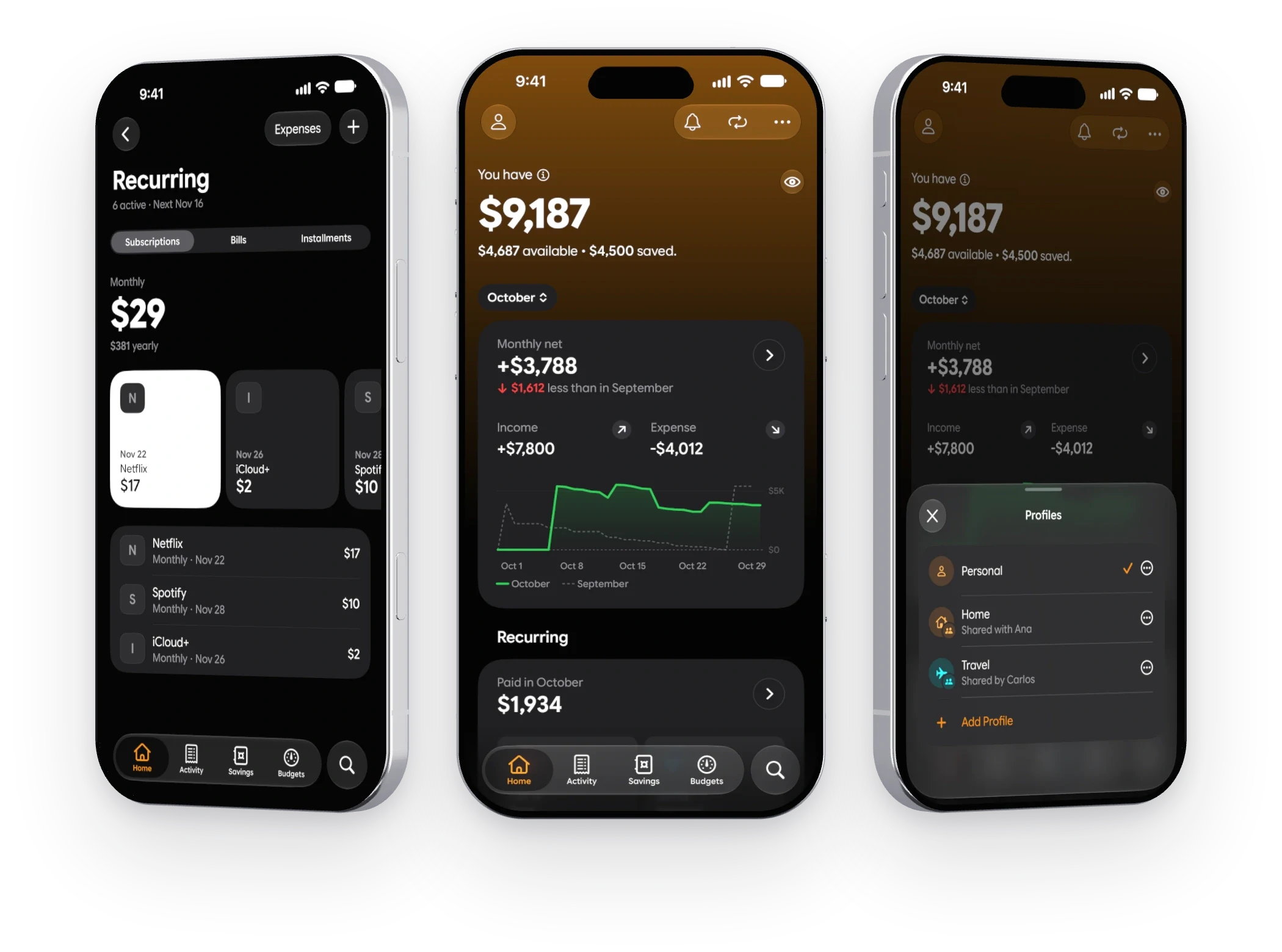
A subscription, an account, a server holding your transactions, and a business model that needs your data to keep working. I wanted the opposite, so I built it: you pay once, you own it. No account, no subscription, no ads, no trackers. Your data lives on your device and in your own private iCloud — never on my servers, because there are none.
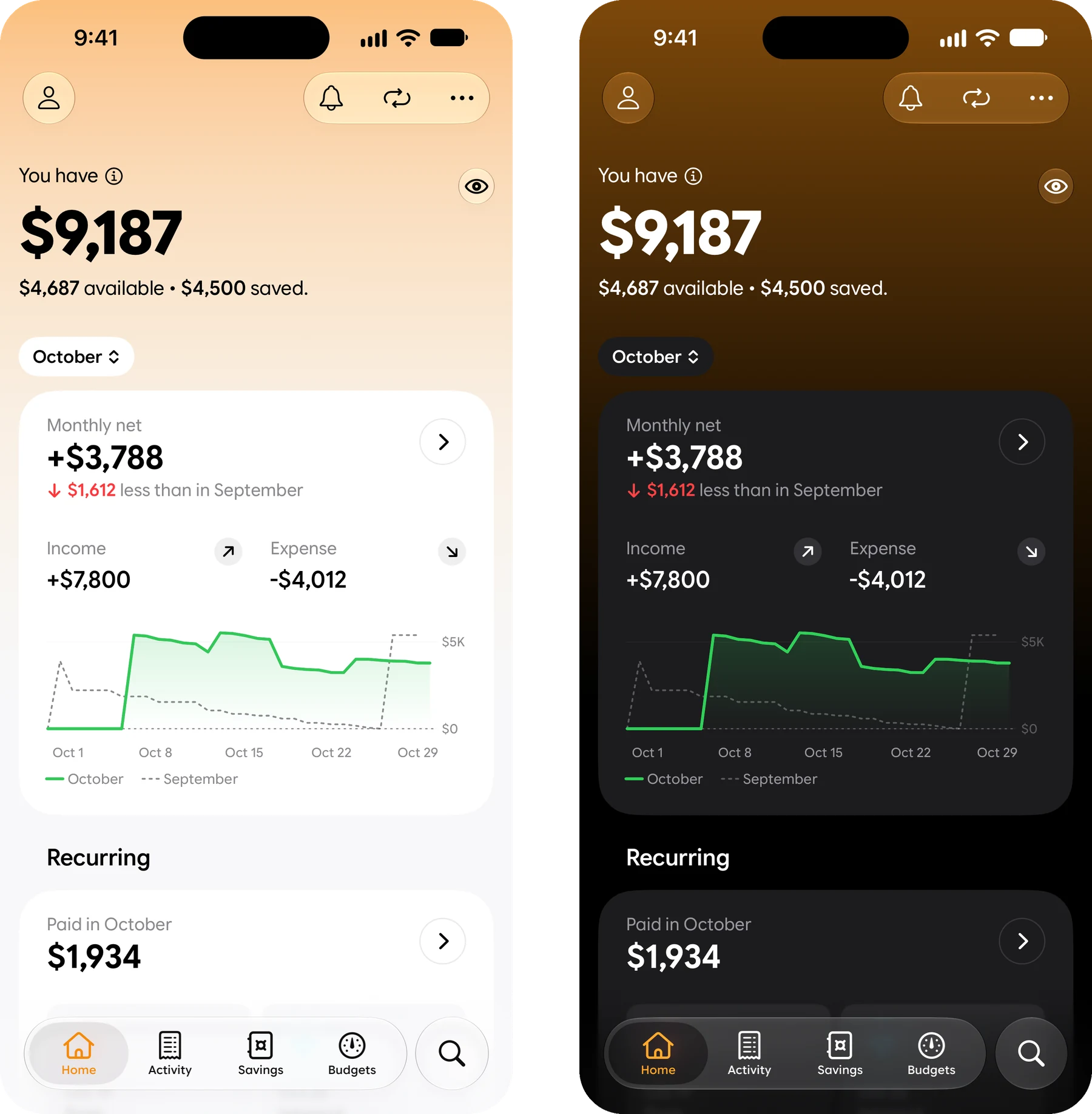
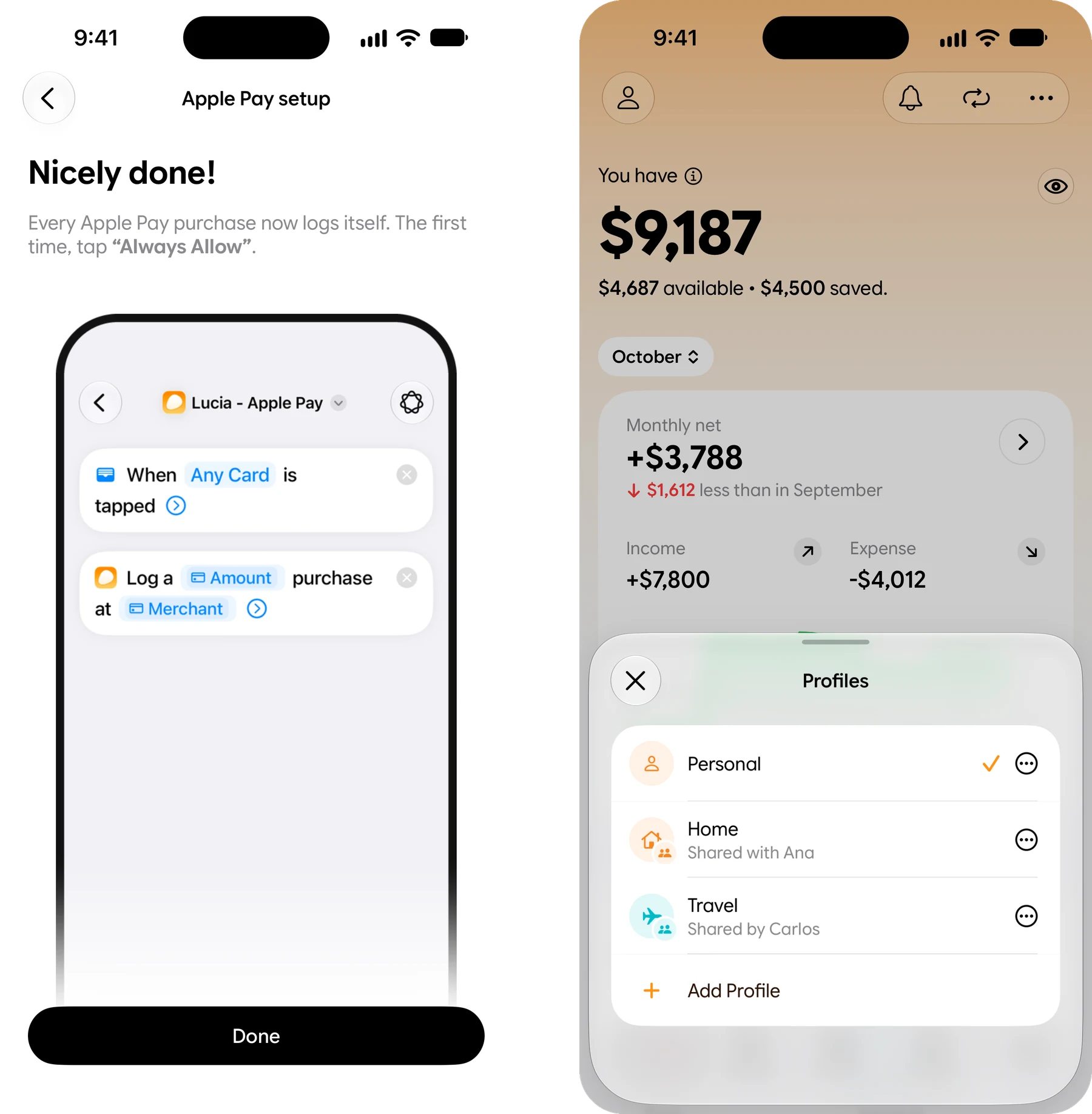
Inside, it does the work a budget app should: cash flow and spending in one view, savings goals, per-category limits that warn you before you go over, and recurring subscriptions and bills with the logos of more than a hundred services. Apple Pay purchases log themselves.
02The system underneath
One set of foundations,
two shipped apps
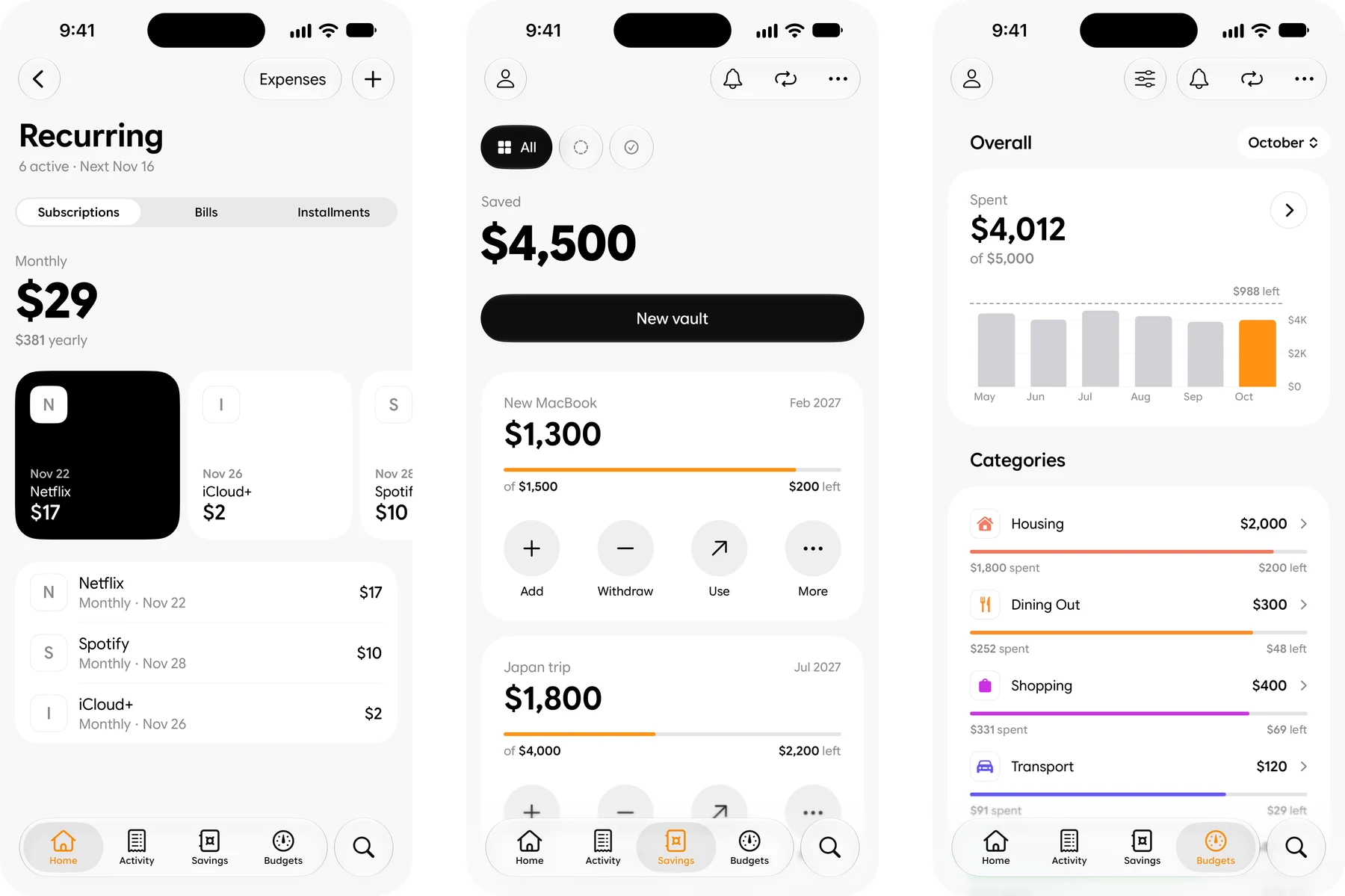
Lucia is not a one-off. Its foundations (type scale, spacing, radii, control sizes, theme colours, motion, the card and sheet shapes) are a layer of their own, and Nodo is built on the same ones. Each app keeps its own brand colours and its own components for the features the other doesn’t have.
The rule I set myself is the one I’d set for a client team: a foundation changes in both apps or in neither. A script checks every call site and fails the build if a screen reaches past the foundations for a colour, a size or a font. That’s the part that makes it a system instead of two apps that look alike.
03Designing it
Native where it counts, ours where it matters.
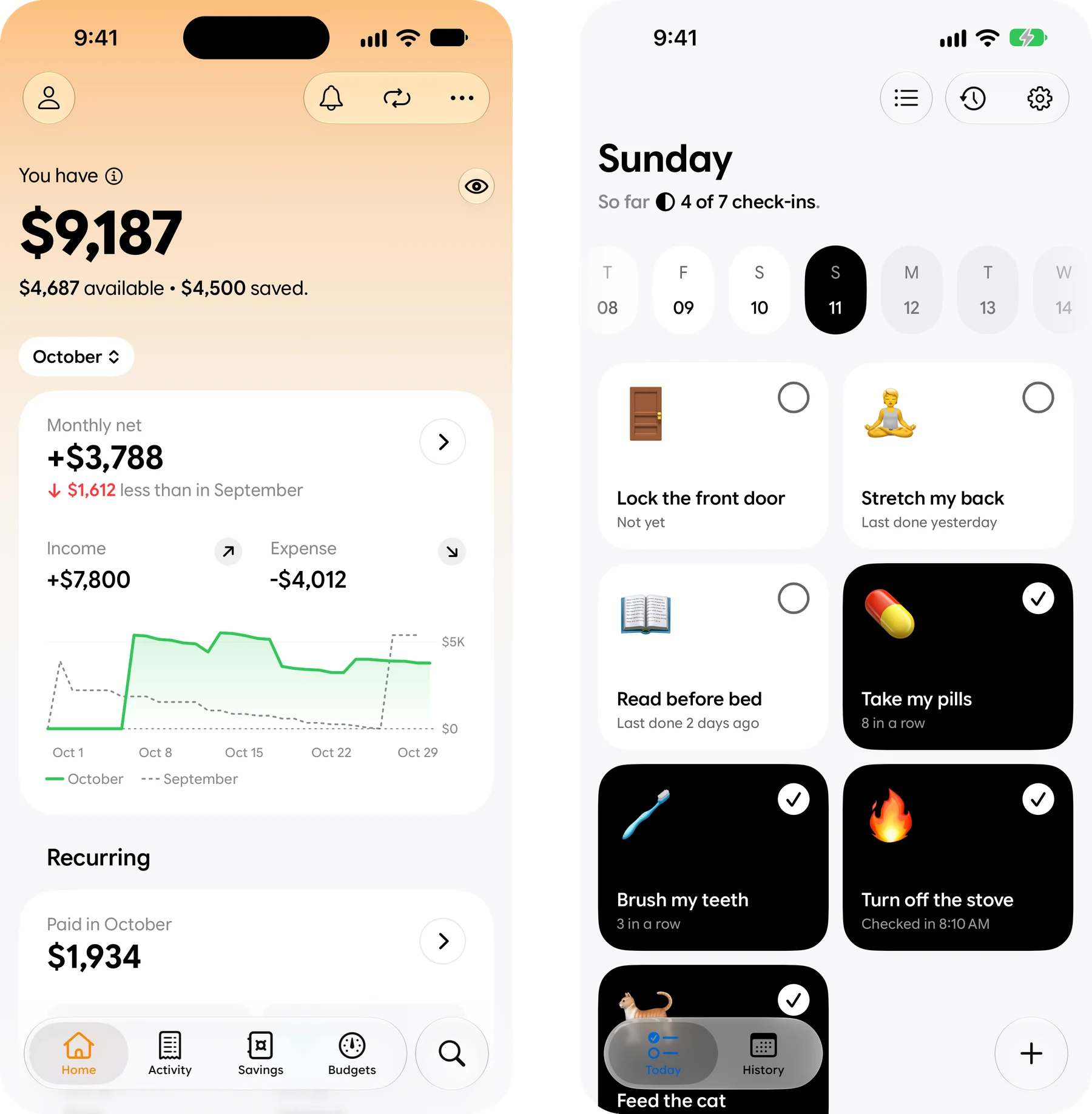
The target was Wallet and Health: an app that feels like it came with the phone. Native surfaces, Dynamic Type, full light and dark, every screen size from the small iPhone to the 13-inch iPad.
What’s ours is the brand sitting on top: First Sans throughout, one orange, and one gradient in the whole app, on the home screen, taken from the app icon. Underneath, 150 currencies, each with its own symbol, its own placement and its own number of decimals, because a budget that prints your money wrong is not a budget you trust.
04Building it
Designed and built by the same person, which changed the design.
I wrote the app in SwiftUI with Claude Code. That isn’t a novelty line on a slide. It’s why a solo designer could ship this at all, and it changed how I designed. There’s no handoff, so there’s no gap between what I drew and what shipped: when a spacing felt wrong I fixed it in the running app, on the device, in the same hour.
It also made me honest about systems. Every shortcut I took in the foundations came back to me a week later in the other app. The governance script exists because I’m the one who kept breaking the rule.
05What shipped
Live on the App Store
Not a concept, not a prototype. A product people have bought, rated and kept.
Reflection
Six years of client work taught me how to build systems inside someone else’s company, with someone else’s constraints and someone else’s deadline. Lucia taught me what it costs to own every decision: the product, the system, the code, the store listing, the support email. I design differently now. I know which of my ideas are expensive, because I’m the one who had to build them.
 Next project · Nodo · First & Last · 2026