 Nodo · First & Last · 2026
Did I? Now you’ll know
The second product from my studio, and the one that proved the system was real: a different app, a different brand, built on the same foundations.
- Studio
- First & Last
- Role
- Product, design, system, code
- Year
- 2026
- Platform
- iPhone & iPad
- Shipped
- On the App Store ↗
01The product
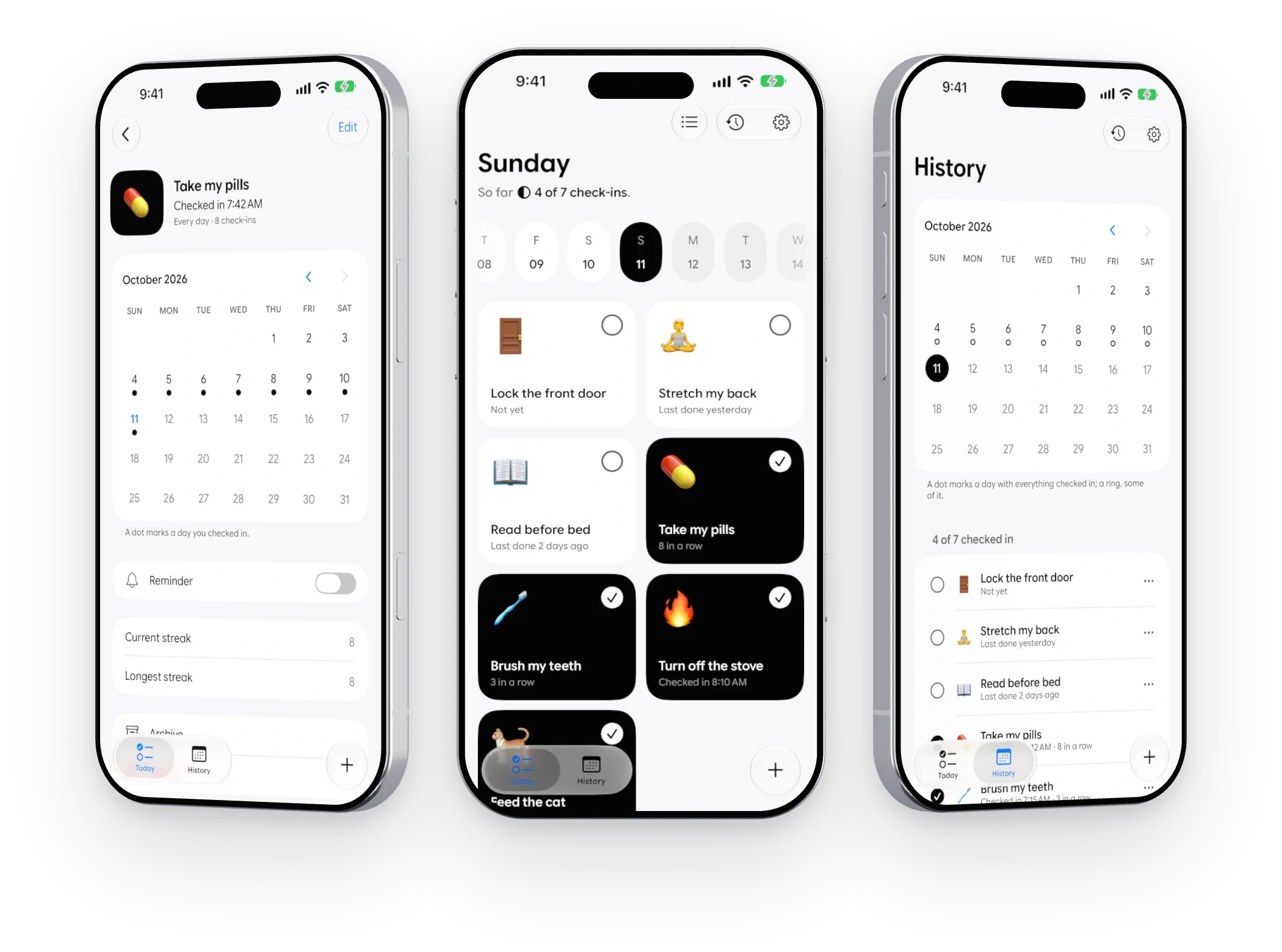
Did I lock the door? Did I already take the pills?
Everyone knows that particular blankness. You did the thing twenty minutes ago and the memory is simply gone. Nodo answers it: one tap when you do something, and it remembers when.
What it deliberately isn’t is a habit tracker. Streaks and stats exist, but they’re off until you turn them on for a specific thing, because the everyday question is "did I?", not "how am I doing?" Most apps in this space answer the second question and make you feel watched while you look for the first.
02The system
The second app is where
a system gets tested
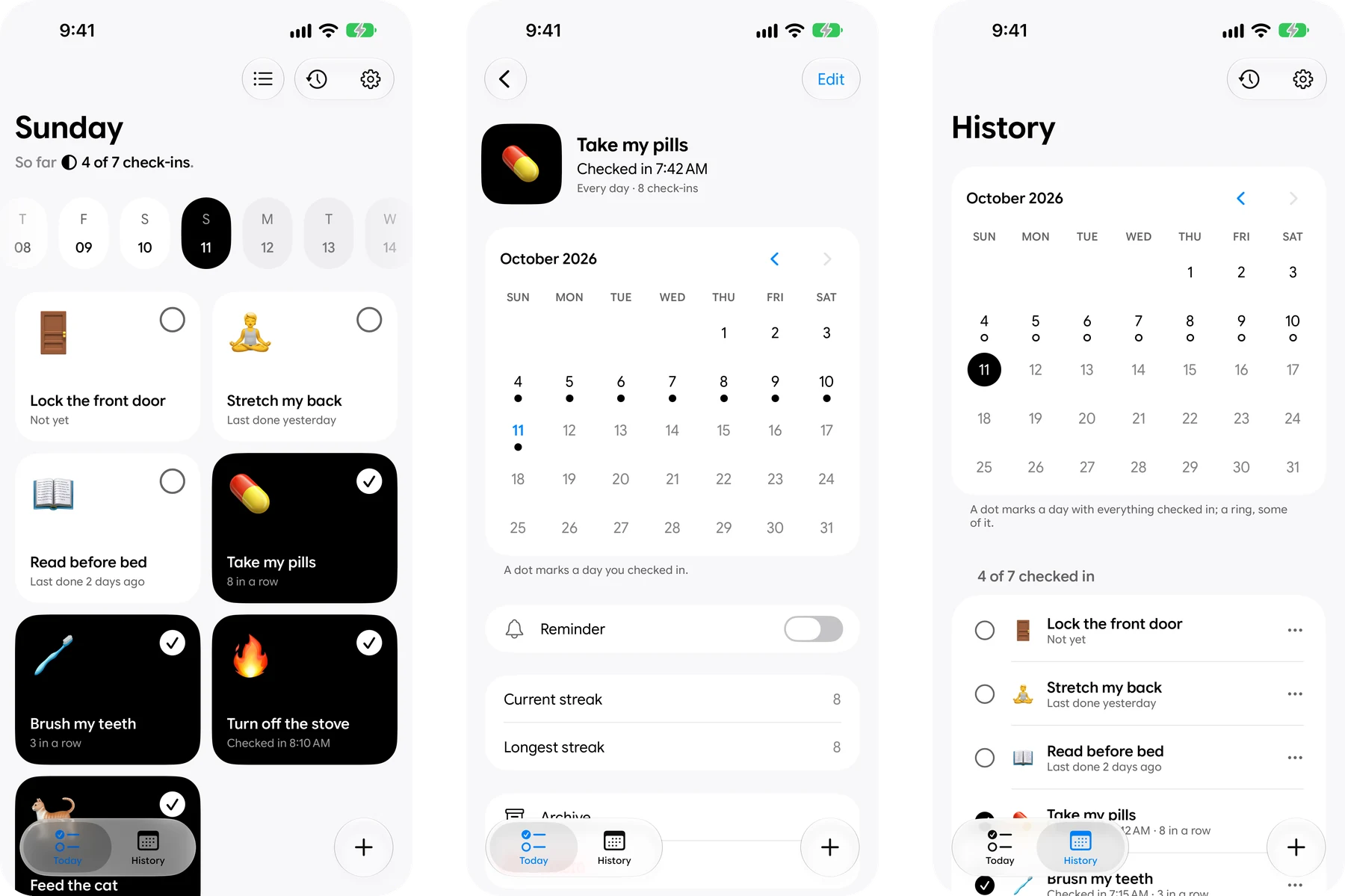
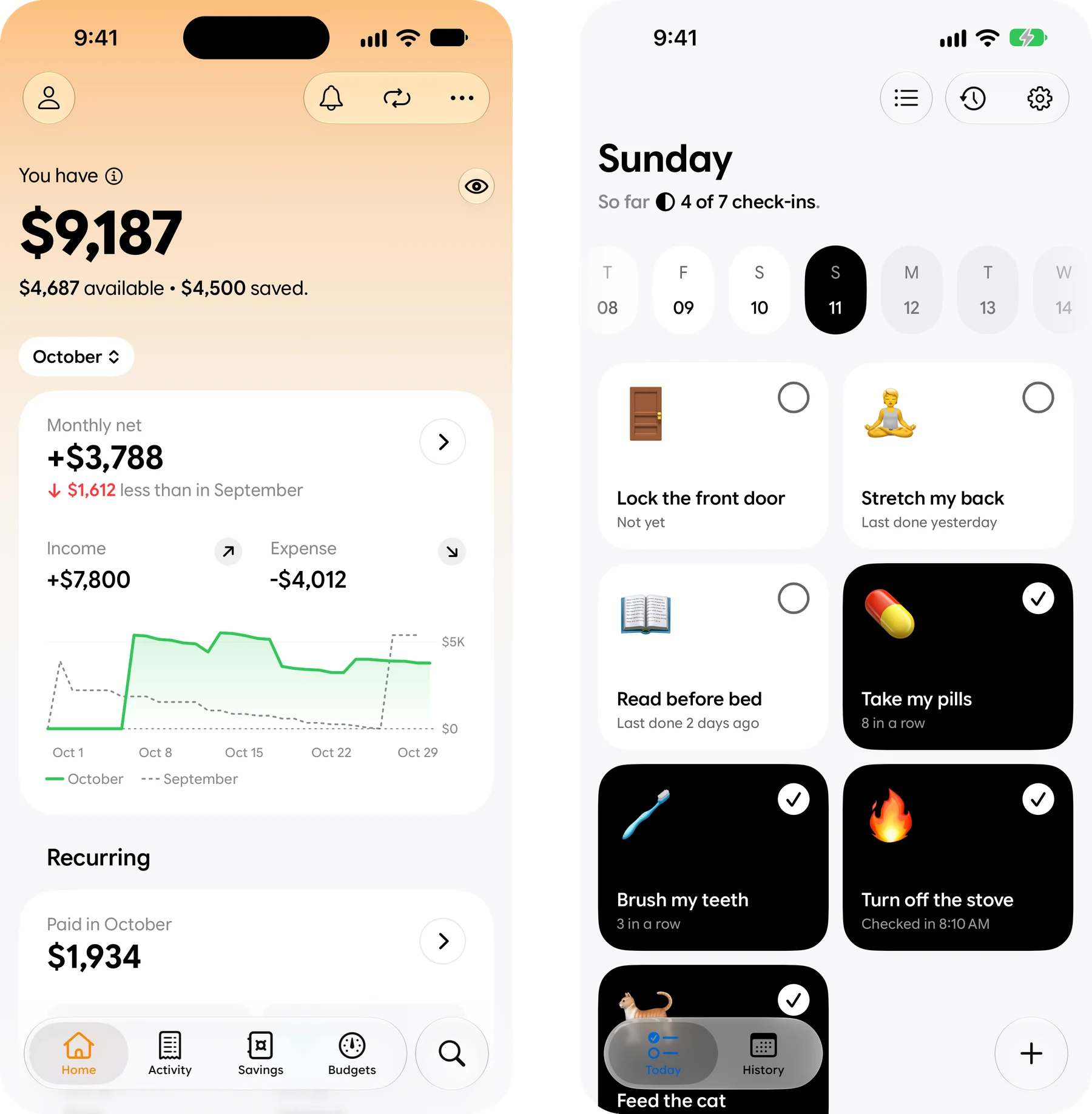
One app with a design system is just an app with good habits. The test is the second one. Nodo took Lucia’s foundations (type scale, spacing, radii, control sizes, theme colours, motion, the card and sheet shapes) and kept its own brand colour and its own components for everything Lucia doesn’t do.
Each foundation file carries a header saying what was removed and what was adapted, so the drift is written down instead of discovered later. A script fails the build if any screen reaches past the foundations for a colour, a size or a font. A foundation changes in both apps or in neither.
03Designing it
One rule, everywhere it means something.
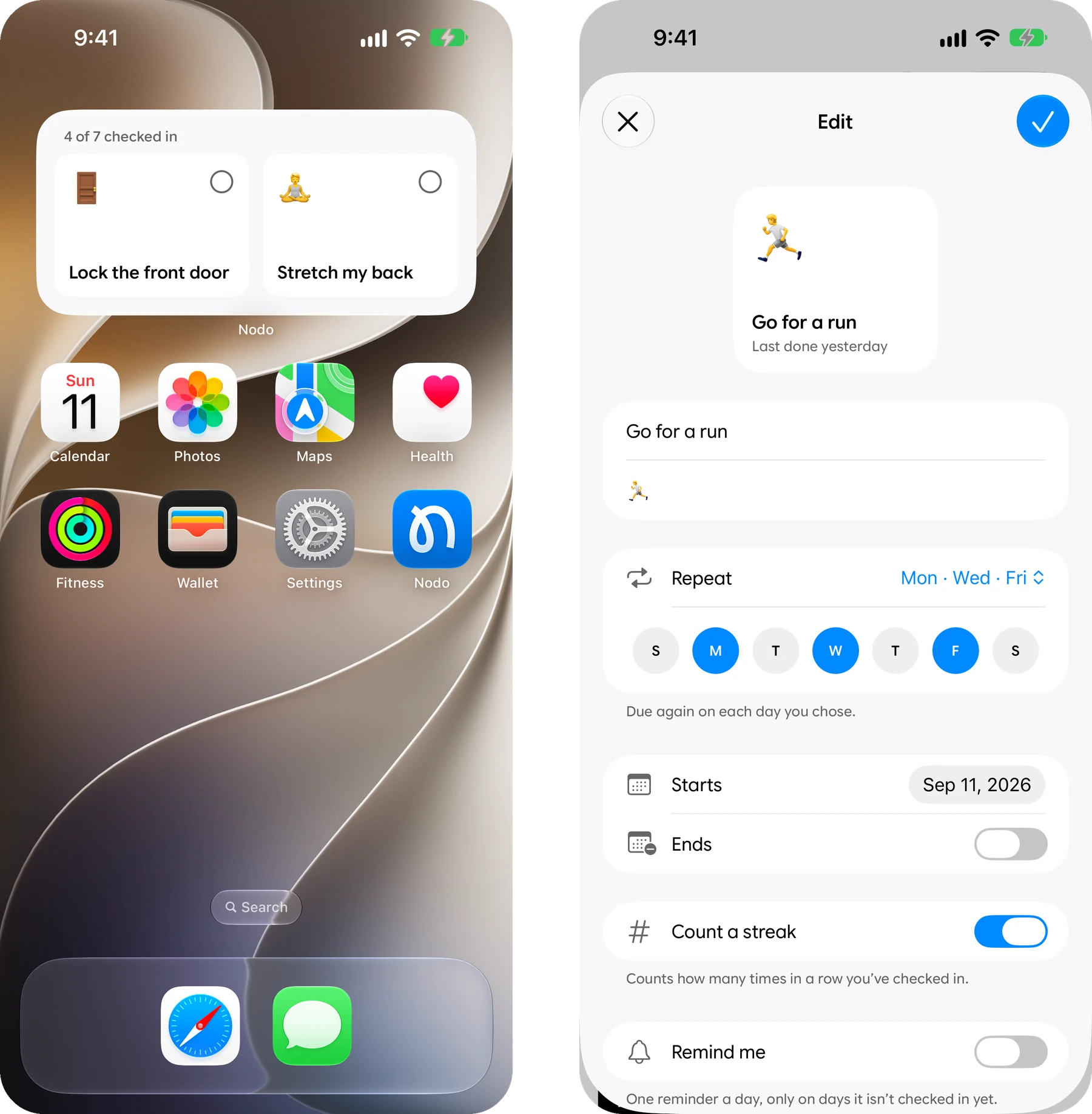
A checked-in thing is a filled shape in the label colour. An open one is not filled. That single rule carries the whole app: the board’s tiles, the week strip, a routine’s header, both widgets, the editor’s live preview. Learn it once on the first screen and every other screen is already readable.
The harder decision was what to draw for a day when things were due and none were done. The answer is nothing at all — exactly what an empty day draws. A month grid of hollow outlines would be thirty small accusations, and nobody opens an app to be told off.
04Building it
A second product costs a fraction of the first.
That’s the whole argument for a design system, and building both apps myself is the first time I’ve been able to measure it rather than assert it. Lucia’s foundations arrived in Nodo as working code, so the work left was the part that is actually Nodo: the check-in model, the fill language, the schedules.
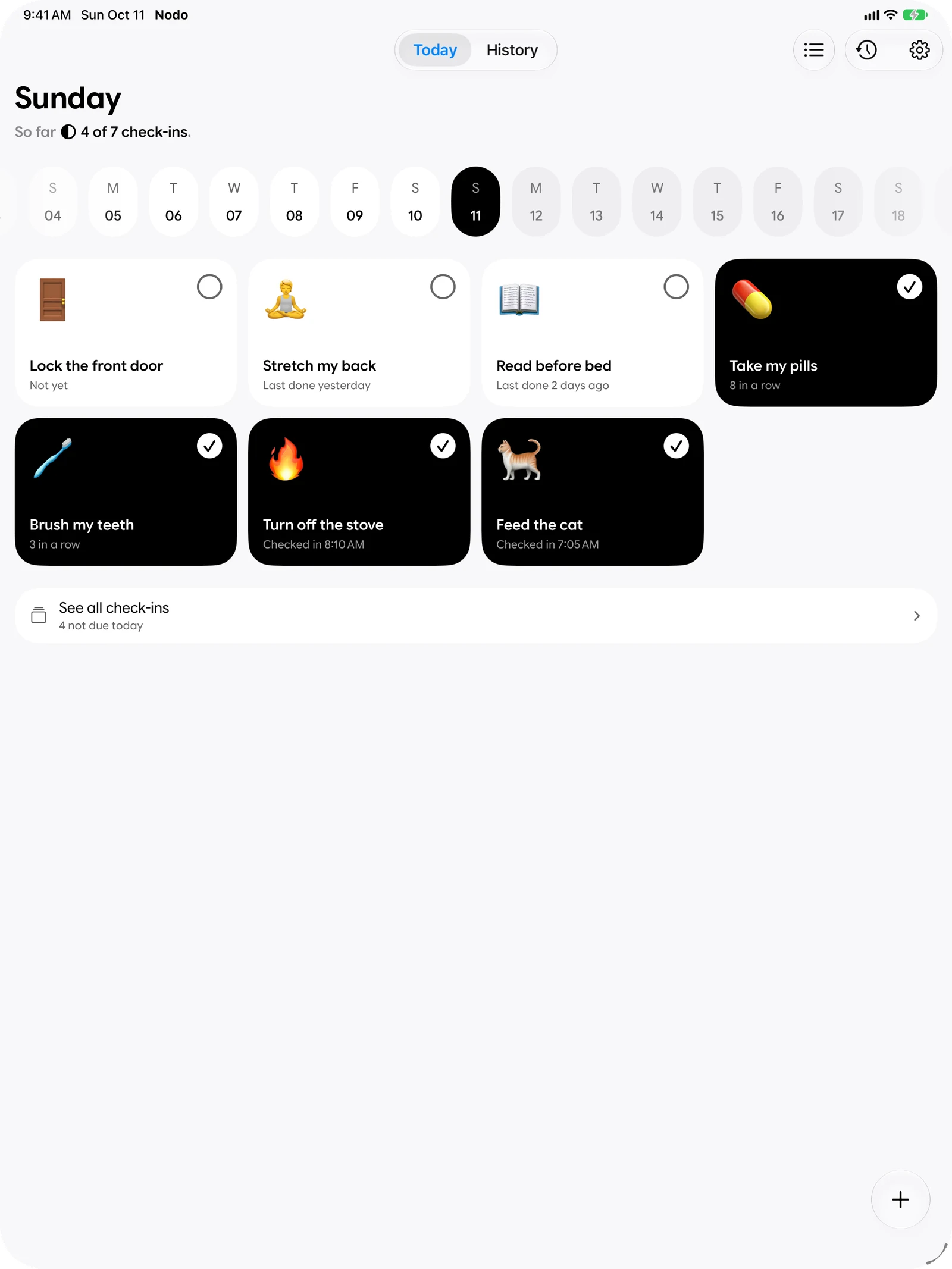
Written in SwiftUI with Claude Code, same as Lucia. It ships in six languages, on iPhone and iPad, with widgets, Lock Screen and Control Center controls, and Siri shortcuts: the surface area a solo designer could not have covered by hand.
05What shipped
Free to start, on the App Store
Two products, one system, both live.
Reflection
At Chrome and Dow Jones I build systems other designers consume, and I have to take their value on faith and on survey data. Nodo is the first time I’ve been on both ends of one, as author and as consumer, with every shortcut I took coming back to find me. It made me a better systems designer than any amount of documentation did, because the second app is where you find out whether the first one was really a system.
 Next project · Dow Jones · 2024